Start with the original reference
Rolex lists the original Datejust 36 reference 126200 with a domed bezel, a date window and calibre 3235. Its Datejust 41 reference 126334 uses a fluted white-gold bezel and also has calibre 3235. These are original-watch specifications, not evidence of a replica's movement or materials. The official pages below provide examples of two configurations; they do not describe every Datejust combination.
Retail descriptions often group smooth and domed bezels together. For a useful comparison, match the exact profile shown on the chosen reference. Likewise, a photograph of a fluted bezel says nothing about whether a replica part is steel, plated or solid precious metal.
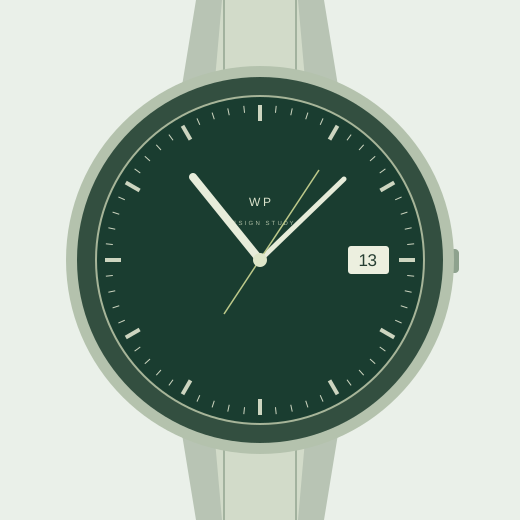
Datejust 36 versus Datejust 41
| Question | 36 mm configuration | 41 mm configuration |
|---|---|---|
| Visual balance | Compare dial opening and bracelet taper with your wrist. | Check that the larger dial and end links remain within your wrist. |
| Measurements to request | Actual diameter, thickness and lug-to-lug length. | The same measurements; a listing's size label is insufficient. |
| Useful photo | Side view with the bracelet laid flat. | A wrist view with wrist circumference stated. |
Neither size automatically suits a particular gender or wrist circumference. Measure a watch you already wear comfortably, including how far its rigid end links extend. Compare those dimensions with the actual replica rather than estimating fit from a close-up dial image. Ask whether the bracelet can be shortened enough and whether additional links are available.
Choose the bezel and bracelet together
The Jubilee's five-piece link pattern and the Oyster's three-piece pattern create different visual rhythms. Decide which you prefer before comparing sellers, then keep the bezel, bracelet and dial combination consistent across your shortlist. The original Rolex pages show real combinations to use as a visual baseline.
On the replica, request close-ups of end-link fit, clasp closure, screw heads and the surfaces between links. Ask which adjustment positions actually work. Confirm the supplied bracelet, not merely the bracelet in the first advertising photograph. If choosing a two-tone finish, obtain a written description of the base metal and coating.
Examine the date as a function
A straight-on photograph should show the date centred within its window, with the lens visible from a second angle. Ask for several dates, including a single digit and dates in the twenties. A single carefully positioned image can hide inconsistent alignment across the date disc.
Request a short video of time setting and date operation using the supplied movement's instructions. Ask which crown position changes the date and whether the seconds hand stops during time setting. Do not assume a calibre number engraved on a replica means it contains a movement manufactured by Rolex.
Questions that complete the comparison
- Which original reference and production generation does this configuration imitate?
- What movement is installed, and who can service or replace it?
- Are the photographs of the exact dial, bezel and bracelet being supplied?
- What are the return terms if the dimensions or date function differ from the description?
This page suits readers deciding between two everyday date-watch configurations. For a day-of-week display, compare the Day-Date guide; for a cleaner time-only dial, see Oyster Perpetual replicas.
Reference sources
- Rolex Datejust 36, reference 126200Original 36 mm model, domed bezel, Jubilee bracelet and calibre 3235; checked 13 October 2026.
- Rolex Datejust 41, reference 126334Original 41 mm model, fluted white-gold bezel, Oyster bracelet and calibre 3235; checked 13 October 2026.