Read the original dial layout first
The original Rolex Cosmograph Daytona reference 126500LN has a 40 mm case and calibre 4131. Its running seconds are at six o'clock; the chronograph uses a central seconds hand, a 30-minute counter at three and a 12-hour counter at nine. A tachymetric scale surrounds the dial. These original specifications identify a reference layout and do not establish what a replica contains.
Distinguish running seconds from elapsed seconds when reviewing a video. A stationary long central hand can be normal on a chronograph that has not been started. Conversely, three visible subdials do not establish that the replica measures elapsed hours and minutes.
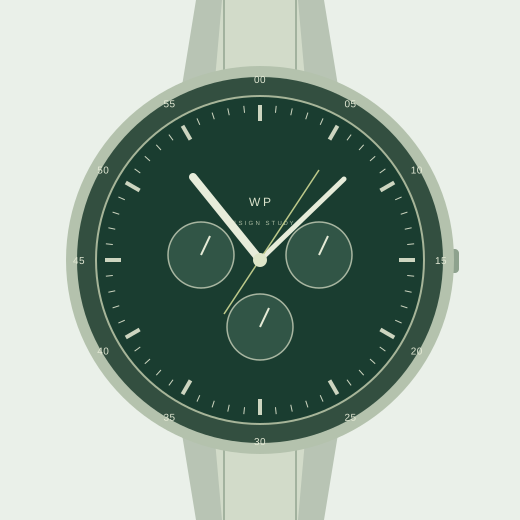
Request a complete function demonstration
- Ask the seller to identify the running-seconds display while the chronograph is stopped.
- Have the chronograph started, then stopped after a visible interval.
- Request evidence that the elapsed-minute counter advances, not just the central hand.
- With the chronograph stopped, have it reset and show where each elapsed-time hand returns.
- Ask separately whether the elapsed-hour counter works and how that was checked.
Follow the instructions for the actual installed movement; do not press buttons in an arbitrary sequence based on an original Rolex guide. Ask whether any subdial instead shows the date or a 24-hour indication. An honest description of a different mechanism is more useful than an unexplained claim that all functions are correct.
Keep the reference generation consistent
Compare the advertised replica with one original generation at a time. Case outlines, dial details and bezel presentation should be evaluated against the selected reference, rather than mixing features from unrelated catalogue images. Ask the seller to state the reference being imitated and confirm that all supplied photographs show that version.
For the dial, inspect counter spacing, the minute track, hand alignment and the central hand's clearance. For the bezel, request a straight-on picture showing whether numerals and markers sit consistently around the circumference. Avoid judging small details from an image whose perspective distorts one side.
Case thickness and pushers matter on the wrist
Request a measured case thickness as well as diameter. A side view should include the crystal, case back and pusher profile. Compare the total height with the space under a shirt cuff or jacket sleeve. The same nominal diameter can feel different when the case or clasp is substantially taller.
Ask how the pusher collars and crown should be operated on the replica. If an Oysterflex-style strap is offered, confirm its material, size segments and replacement options. Do not assume that an elastomer strap contains the same internal construction as Rolex's original Oysterflex bracelet.
Match the choice to its maintenance needs
Obtain the movement's actual name, available service route and written policy for a chronograph that stops or fails to reset. Find out whether the remedy is repair, replacement of the whole movement, or returning the watch. A copied calibre marking is not a parts catalogue.
This page is for readers who want a chronograph's appearance and need to understand its usable features. If daily calendar reading matters more than elapsed timing, the Datejust comparison provides a more relevant starting point. Keep any water-resistance or accuracy claim separate from the original Daytona's specifications.
Reference sources
- Rolex Cosmograph Daytona, reference 126500LNOriginal diameter, calibre 4131, chronograph counters and tachymetric bezel; checked 13 October 2026.
- Rolex Cosmograph Daytona featuresOriginal family design and Oysterflex context; checked 13 October 2026.